Skip to content

Panel-type radar target and jammer generator

SPEDIS-X

Radar target and jammer generator in a single panel, for radar and RF seeker testing in the chamber.

SPEDIS-X generates target echoes, deceptive ECM, decoys, chaff, clutter, radar emitters and noise jammers from 2 to 18 GHz, four entities at a time per panel. A four-antenna transmit array sets the angle of arrival of each entity, and the panel needs only power and one 10 GbE link.

  • Defence and security
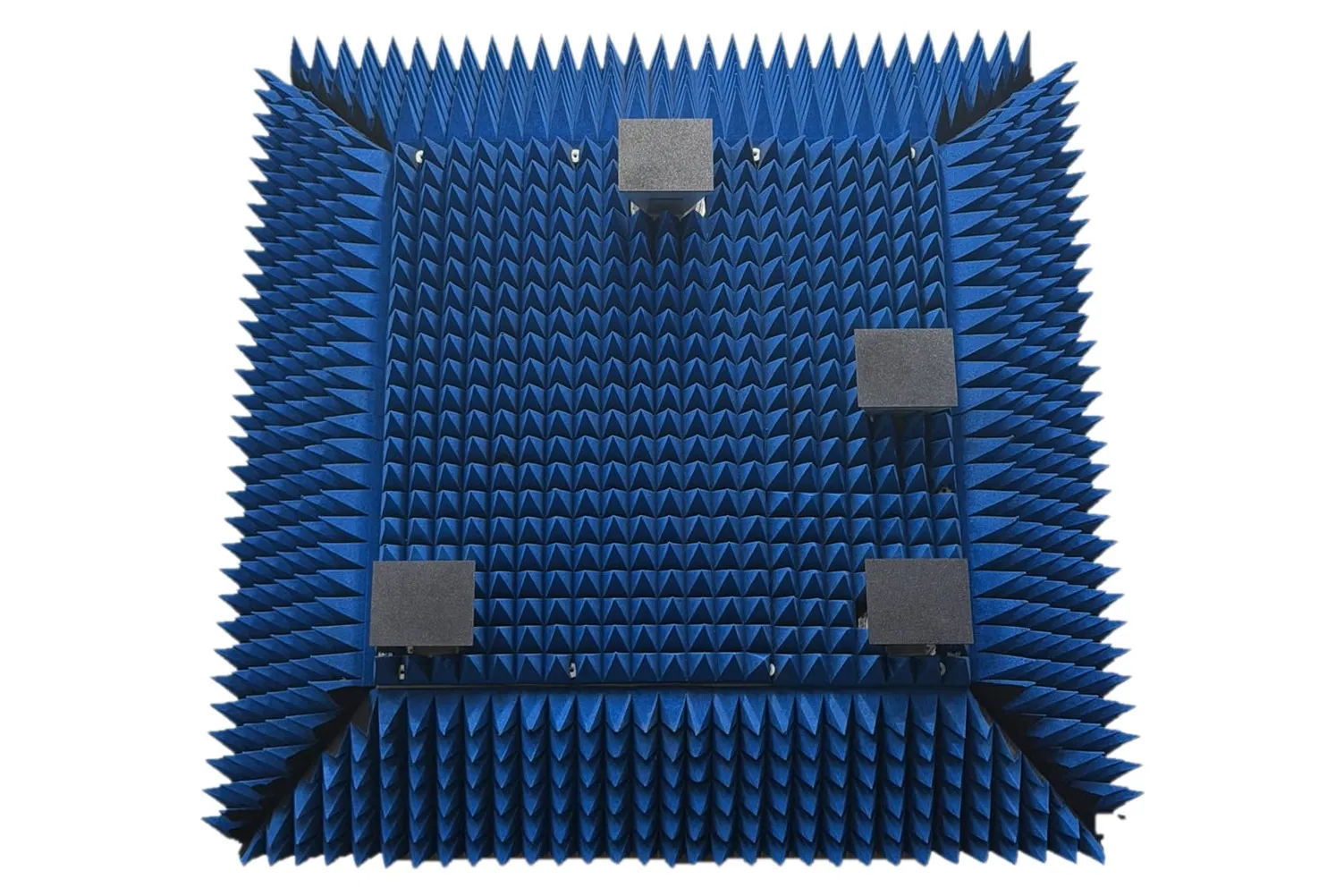
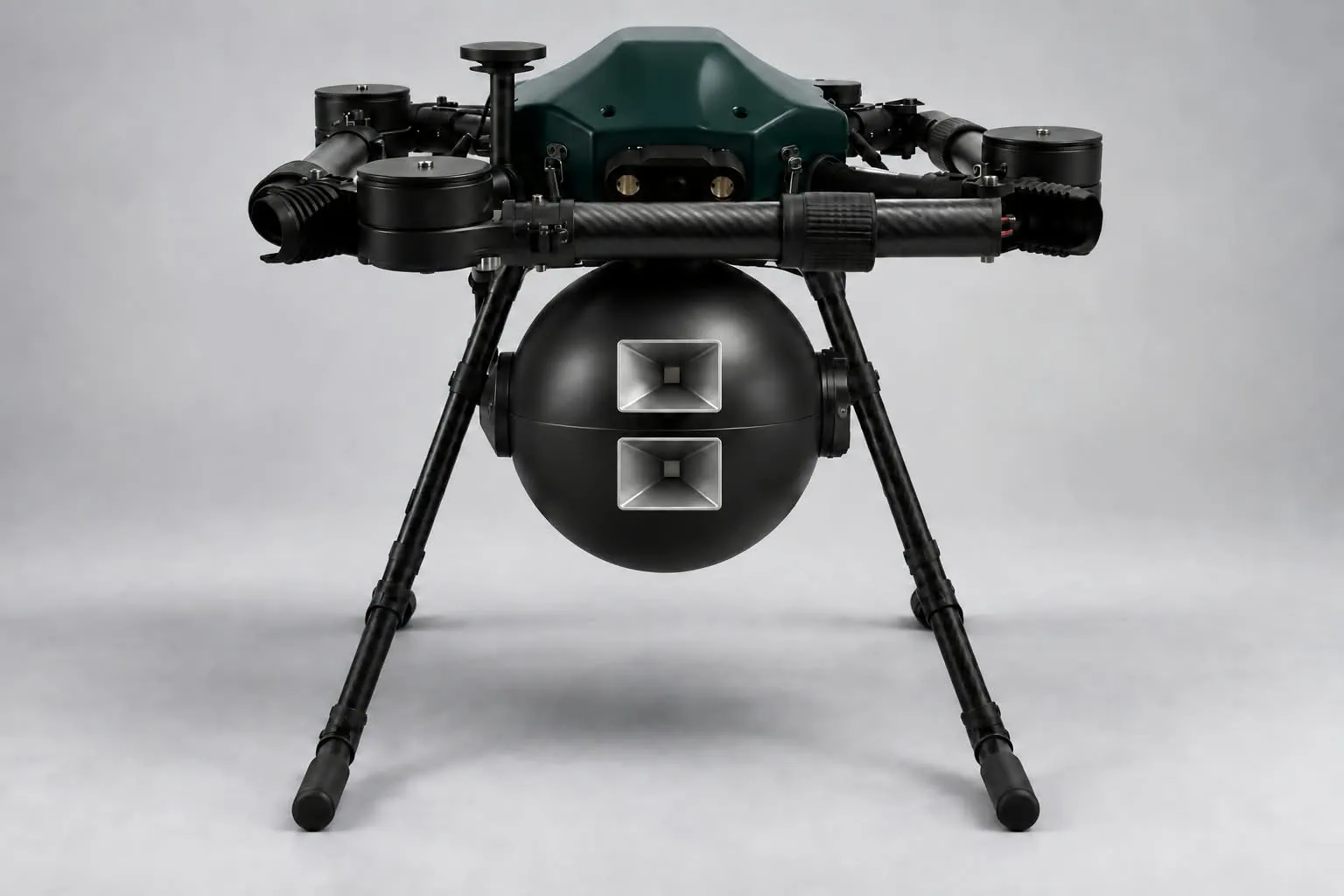
SPEDIS-X panel: four transmit antennas set in pyramidal absorber

Overview

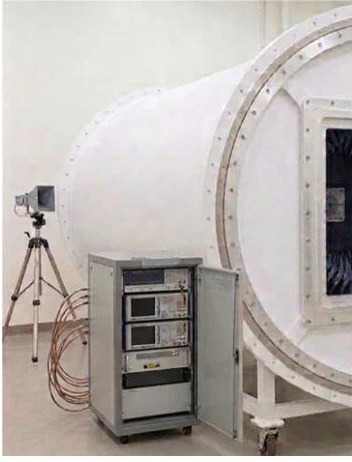
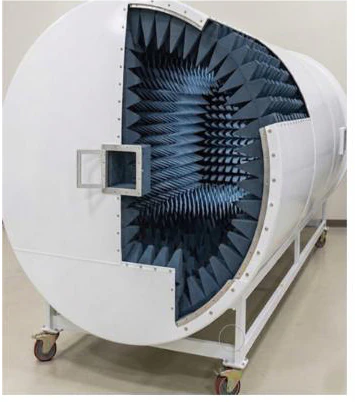
In front of the radar, in the anechoic chamber

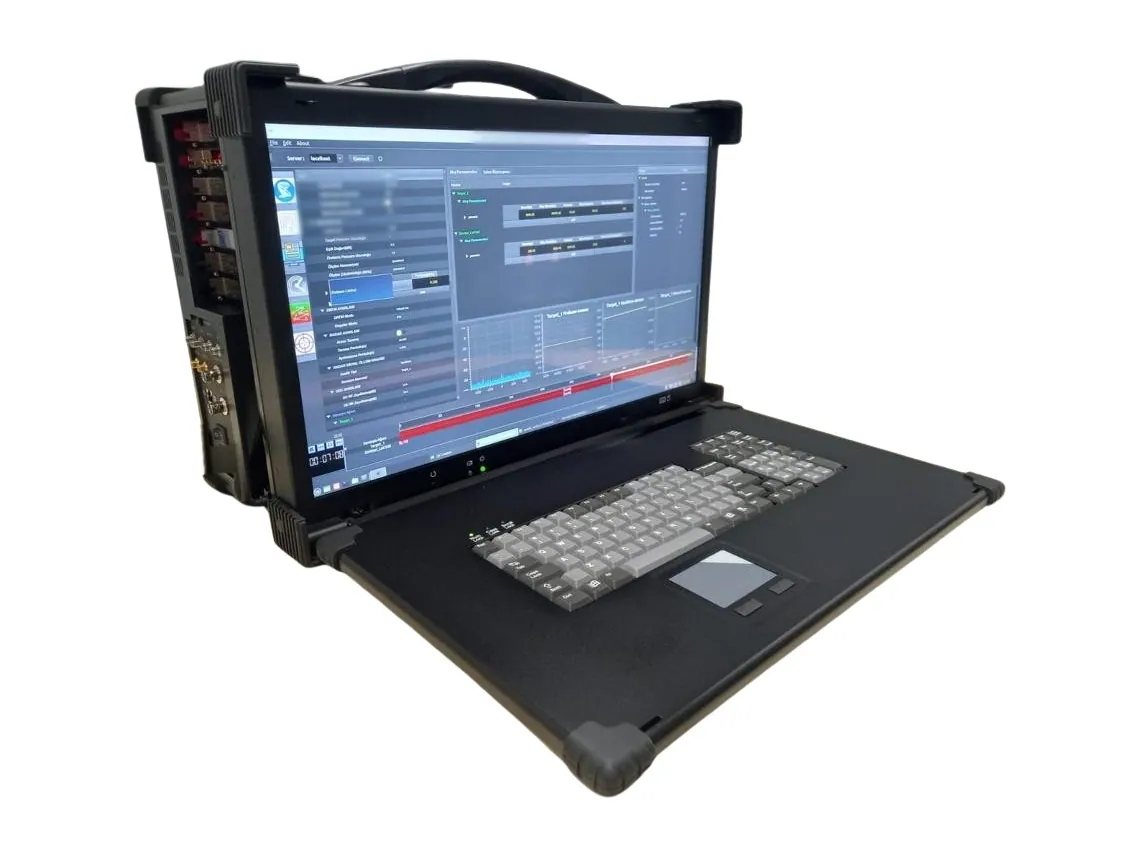
The panel stands in front of the radar or RF seeker under test, receives its signal and radiates target echoes, jammers and decoys back through its transmit array. Scenarios are built on a geographic map at the operator workstation and run stand-alone or with platform states from a host simulation computer in HWIL operation. Several panels combine in one set-up for more entities or wider angular separation.

Key capabilities

  • The whole target generator in one panel

    Receive antenna, one DRFM per entity slot, transmit array and simulation controller in a single panel. Its only connections are power and Ethernet, so it mounts on a fixed stand or a target motion system without RF cabling to the control room.

  • Coherent echoes

    Target echoes, deceptive ECM, false targets, decoys, chaff, clutter and multipath are generated from the received radar signal and follow every change of its waveform, with no prior knowledge of it.

  • Radar emitters and noise jammers

    Pulsed and CW emitters with agile frequency, PRI and pulse width, intrapulse modulation and antenna scan, and spot, swept and barrage noise jamming, generated independently of the radar under test.

  • Angle of arrival

    The 2 × 2 transmit array places the apparent source of each entity within the panel: a decoy separating from its platform, the glint of an extended target, a multipath image.

  • Deception, decoys, chaff and clutter

    RGPO and VGPO with programmable capture, walk, hold and release; towed and expendable decoys that separate from their platform; chaff clouds that bloom and drift. Main-beam ground clutter comes from the patch the radar beam illuminates.

  • Scenarios on a map

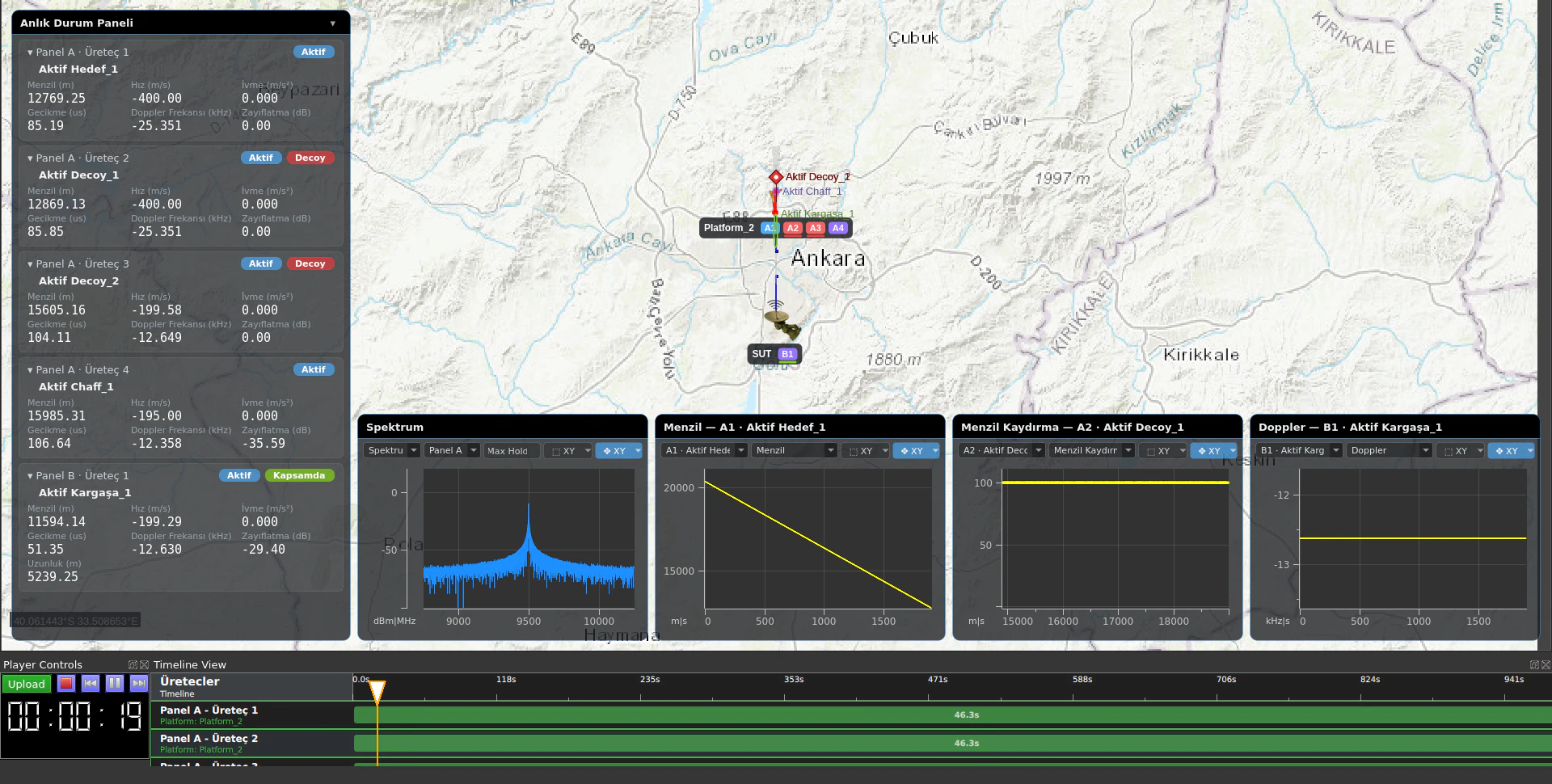
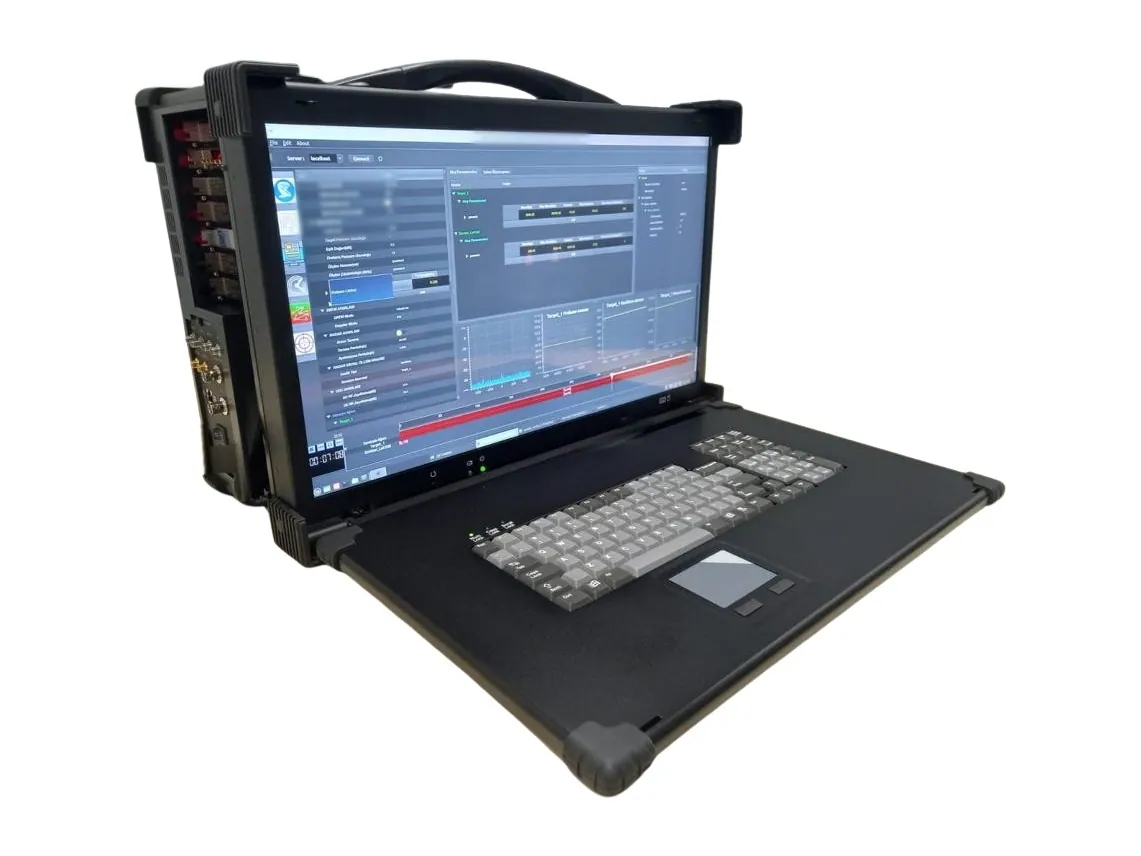
    Platforms, routes and entity assignments on a geographic map with locally stored imagery and terrain, so no network connection is needed. During a run the map, entity status, received spectrum and time histories are shown together.

  • HWIL and customer software

    In HWIL operation the panel takes platform and radar states from the host simulation computer over the same Ethernet link. The optional SPEDIS-X API controls the panel from customer software.

  • Several panels in one set-up

    Panels combine for more simultaneous entities, or for entities separated by more than the angular extent of one panel.

Applications

Defence and security

  • Radar and RF seeker development and test
  • Hardware-in-the-loop (HWIL) simulation
  • ECCM performance evaluation
  • Acceptance and production testing
  • Anechoic chamber test facilities

Specifications

Frequency range
2–18 GHz
Instantaneous bandwidth
1 GHz
Simultaneous entities
4 per panel, each an echo-type or a self-generated entity; more with additional panels
Simulation frame
1 ms; delay, Doppler, amplitude and angle of arrival of every entity updated each frame
Range
300 m – 3000 km, 1 m resolution
Doppler shift
±2 MHz, 0.5 Hz resolution
Frequency resolution
1 Hz
Dynamic range
> 100 dB
Angle of arrival
Within the angular extent of the 2 × 2 transmit array
Propagation
Free-space loss (one-way or two-way) or fixed attenuation; test distance compensation
Target echo
Mean RCS or RCS table over aspect angle and frequency; Swerling 0–IV; several scattering centres; angular glint
Emitter frequency and PRI
Pulsed and CW; frequency constant, hopping, wobbulated or dwell-and-switch; PRI constant, staggered, jittered, wobbulated, dwell-and-switch or burst
Intrapulse modulation
LFM, stepped frequency, stepped amplitude, Barker, BPSK, QPSK, polyphase (Frank, Zadoff-Chu, P1–P4)
Antenna scan
Steady, circular, sector, conical, phased array, raster, helical, spiral; predefined or user-defined pattern
Noise jamming
Spot, swept spot and barrage; continuous, pulsed or blinking; self-screening and stand-off
Deceptive ECM
RGPO/I and VGPO/I, synchronised or not, cover pulse; programmable deception cycle; J/S set relative to the target echo
Multiple false targets
Distributed in range and Doppler: equally spaced, uniform or Gaussian
Decoys and chaff
Towed decoy (cable length, payout speed); expendable decoy (launch direction, speed, deceleration); chaff launch, bloom, spread and decay
Clutter and multipath
Main-beam ground clutter over sea, desert, farmland, forest, urban or user-defined terrain; multipath image returns
Antennas
2 × 2 transmit array, one receive antenna
Interface
10 GbE Ethernet: scenario, control, real-time platform states, status and measurement data
Operating modes
Stand-alone (routes on the scenario map) or HWIL (platform states from a host simulation computer)
Calibration and built-in test
Calibration ports for external test equipment; power-on, commanded and runtime built-in test
Software
Operator software included; optional SPEDIS-X API for control from customer software

Detailed specifications are available on request.