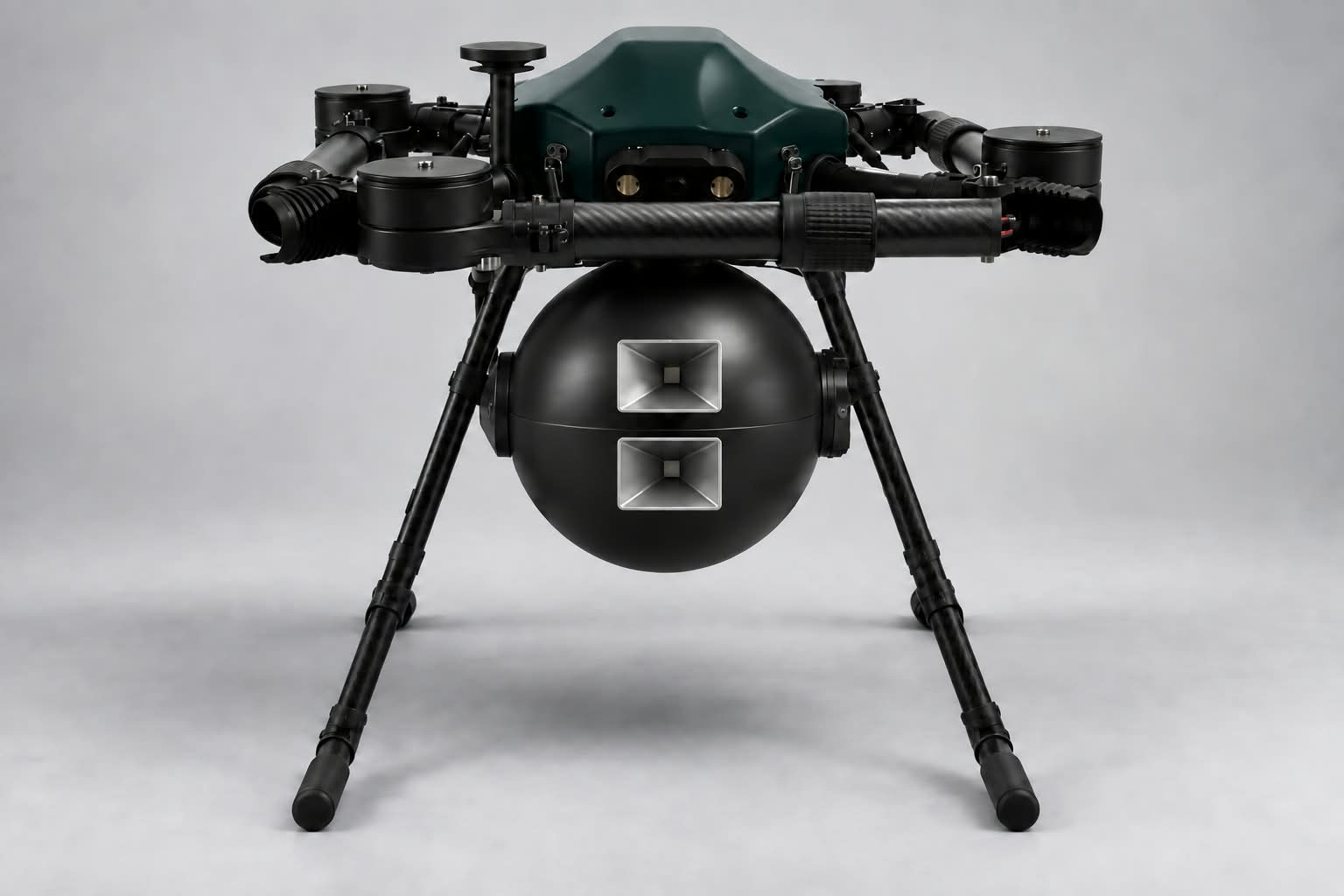
Airborne radar target simulator
Drone-Mounted Radar Target Simulator
Radar target simulator carried by a drone that creates virtual targets in real flight geometry for pulse radar testing.
- Defence and security
Radar target and environment simulator
Tests and verifies radar systems against multiple moving targets, deceptive ECM and noise jammers, from 0.5 to 18 GHz.
DRFM-based radar target simulator that generates up to five moving targets, deceptive ECM and noise jamming for radar test and verification.
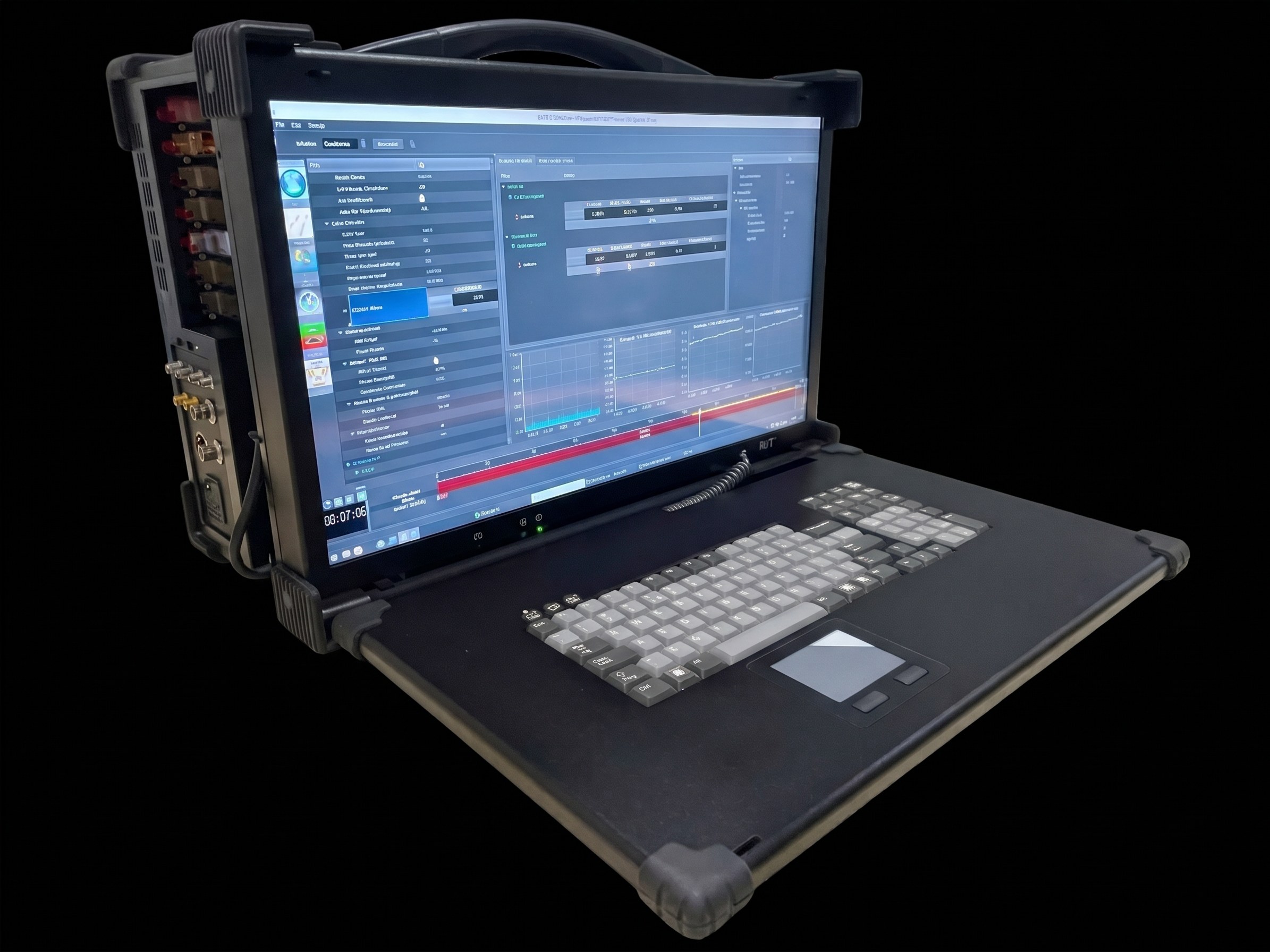
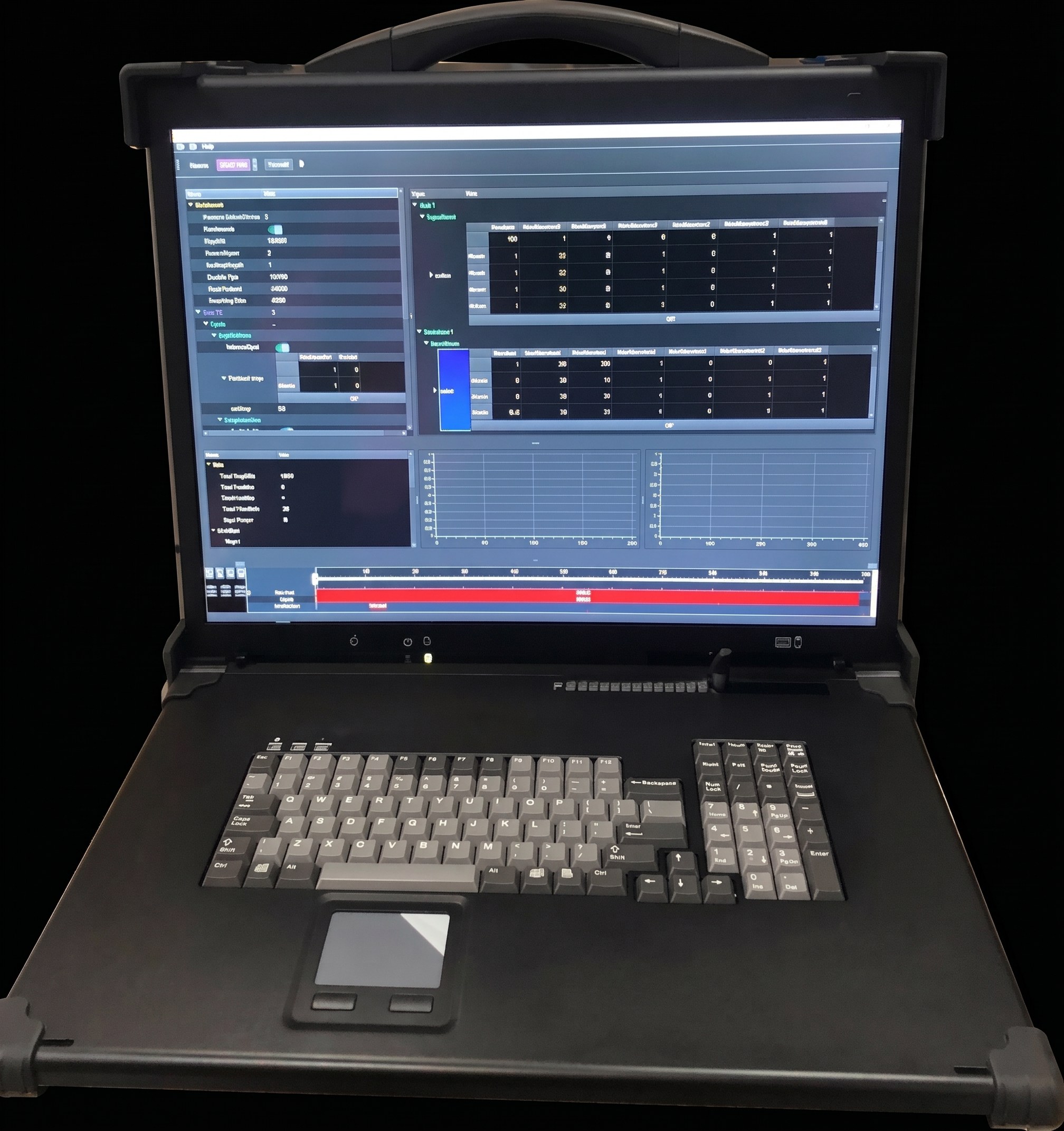
SPEDIS-TRX is a portable radar target simulator built on digital radio frequency memory (DRFM). It receives the radar's transmission and returns it with controlled delay, Doppler shift and attenuation, so the radar sees targets at the range and velocity defined in the scenario. Targets follow user-defined trajectories or real-time motion data from an external source. Deceptive ECM and noise jamming are added to the same scenario to evaluate detection and tracking under jamming. The system works in direct injection and radiation modes. The portable version is for workbench and range testing; versions for anechoic chamber, tower and other test site installations are also available, as is a version extended to 40 GHz.
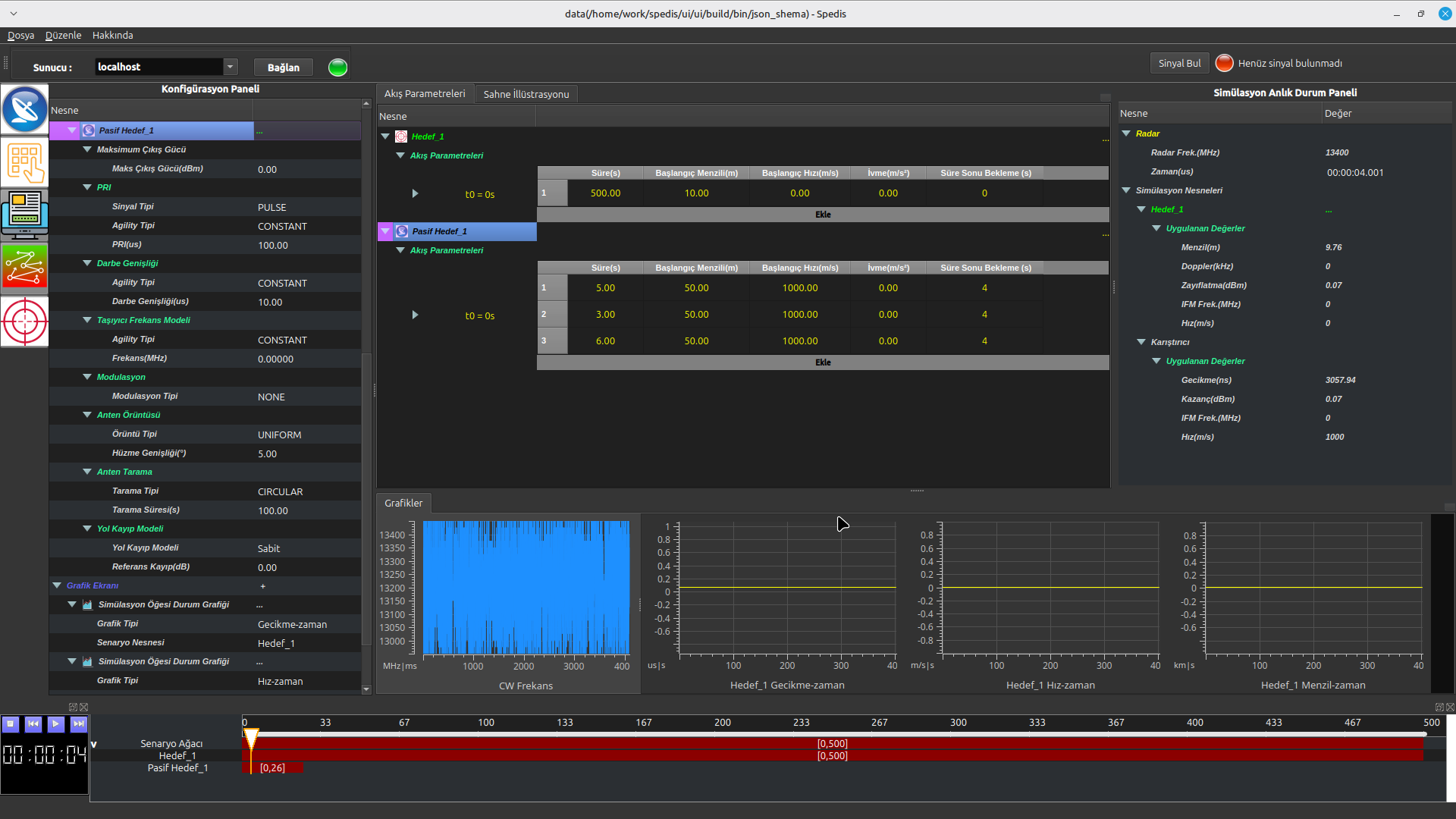
Each target has its own range, velocity, acceleration and attenuation, defined as multiple motion intervals towards or away from the radar. Range runs from 300 m to 1000 km with 1 m resolution, and radial velocity up to 30,000 m/s. Scenarios are saved and reloaded, and an optional interface accepts external motion data at a 1 ms update rate for five platforms.
Range and velocity gate pull-off (RGPO/VGPO, coordinated or uncoordinated), clutter, chaff and multiple false targets test the radar's tracking under deception. Barrage (50, 100, 200 MHz) and spot (1–20 MHz) noise jammers have their own motion parameters.
The simulator monitors the incoming radar spectrum and measures frequency, amplitude and pulse repetition interval. Status graphs show spectrum, instantaneous frequency and amplitude, and pulse frequency, amplitude and period. Optional instantaneous frequency measurement (IFM) has an error below 1%.
Besides targets that repeat the radar's signal, the scenario contains independent emitters that transmit their own CW or pulsed signal at a set output power. PRI follows constant, wobbulation, random, stagger, dwell-and-switch or burst patterns; pulse width and carrier frequency have their own agility types.
Intra-pulse modulation covers Frank, Zadoff, P1–P4 and Barker codes, BPSK and QPSK with custom symbol tables, custom phase patterns, AM and FM steps and FM chirp. Antenna patterns and circular, sector, raster, helical, conical and spiral scans are simulated, with a configurable path-loss model including free-space path loss.
The portable unit weighs less than 20 kg and connects to the radar by direct injection or radiates through antennas. Installations for anechoic chambers, test towers and other test sites use the same scenario software.
Detailed specifications and export information are available on request.
Airborne radar target simulator
Radar target simulator carried by a drone that creates virtual targets in real flight geometry for pulse radar testing.