Skip to content

Airborne radar target simulator

SPEDIS-AIR

Radar target, ECM and noise jamming simulation from a drone, 0.5 to 18 GHz.

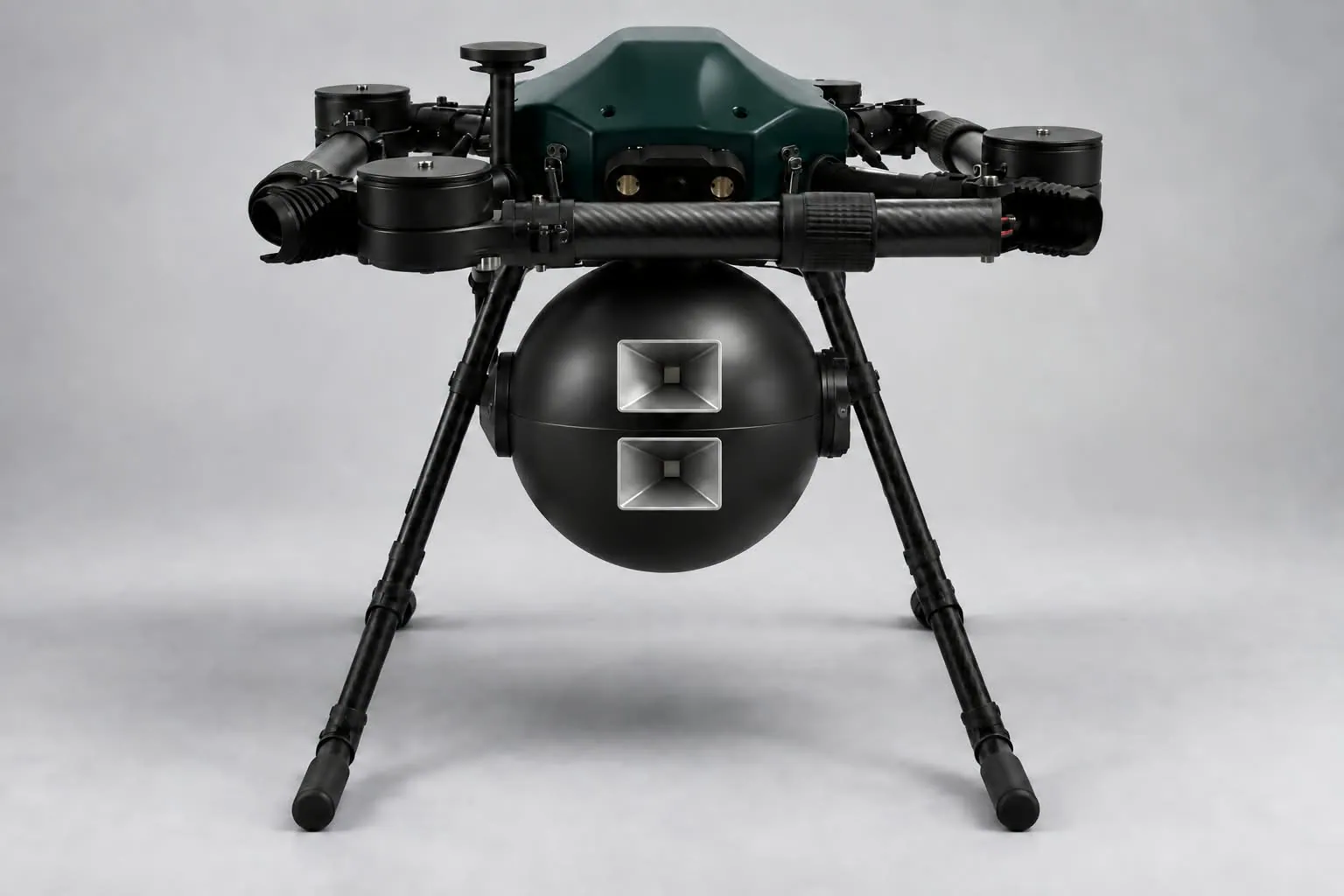
SPEDIS-AIR carries the SPEDIS-TRX radar target simulator on a drone and returns the radar's signal as moving targets, deceptive ECM and noise jamming from 0.5 to 18 GHz. Because the simulator flies, the radar meets its targets along a real airborne line of sight and at real elevation angles.

  • Defence and security

Overview

Radar targets in the air

The drone takes the simulator to the position and height the test needs. SPEDIS-AIR receives the radar's signal through its antennas and returns it as targets at the range and velocity the scenario sets, independent of the drone's own position and speed. The radar is tested on the range against targets it sees in open air.

Key capabilities

  • Up to five moving targets

    Each target has its own range, velocity, acceleration and attenuation profile, defined as steps with hold times. Scenarios are saved and reloaded.

  • Target models and Doppler

    Swerling 0–IV radar cross-section fluctuation, hovering targets with their own Doppler, Doppler sweep and antenna scan simulation.

  • Deceptive ECM and noise jamming

    RGPO and VGPO, multiple false targets, clutter and dynamic chaff test the radar's tracking under deception. A barrage or spot noise jammer with its own motion runs alongside the targets.

  • Real flight geometry

    The simulator flies, so the radar tracks its targets along a real airborne line of sight and at different elevation angles.

  • Path loss and field tests

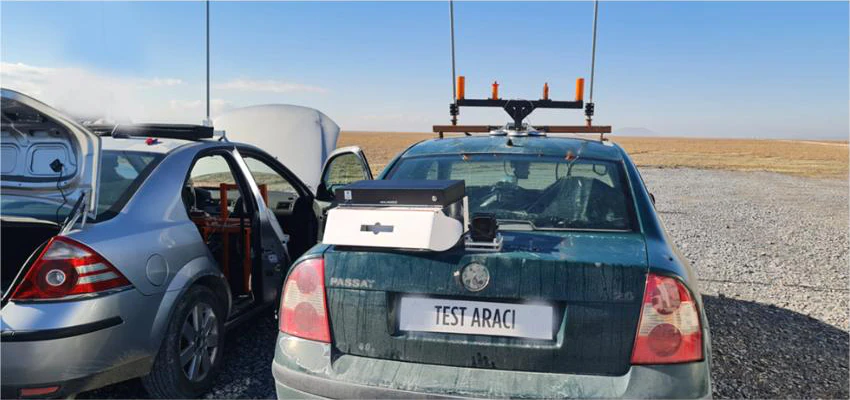
    Range-dependent path loss is part of the scenario; for field tests, the distance between simulator and radar is compensated in delay and level.

  • Radar signal measurement

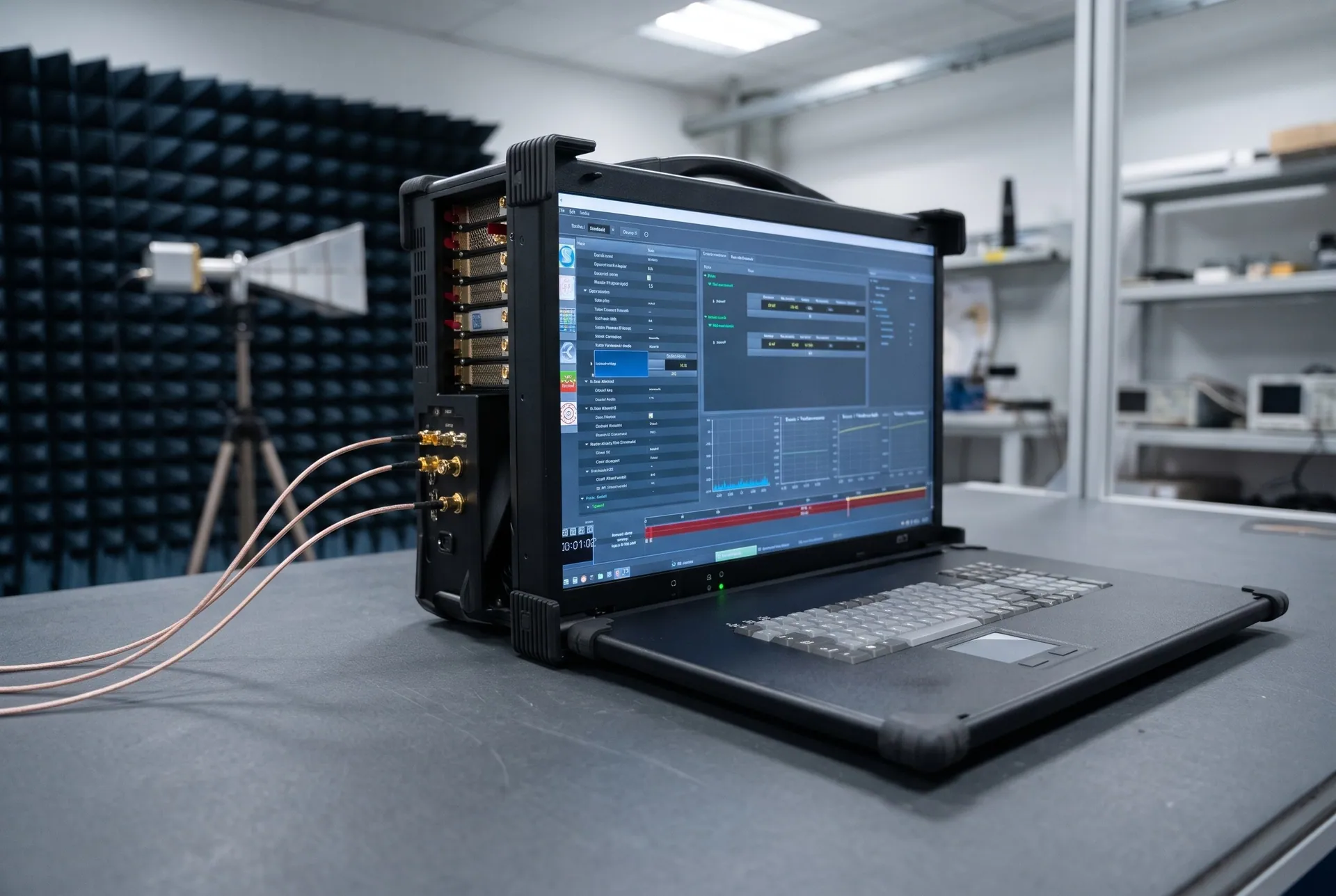
    Shows the spectrum around the set centre frequency and measures the radar's frequency, amplitude, pulse width and PRI.

  • Built-in test and self-calibration

    Checks its own hardware and calibrates internal delay automatically, with no external test equipment.

Applications

Defence and security

  • Radar development testing and verification
  • Radar acceptance and qualification testing
  • ECCM and anti-jamming performance evaluation
  • Range testing of radars against an airborne target

Specifications

Frequency band
0.5–18 GHz
Instantaneous bandwidth
1 GHz
Input signal level
−30 to 0 dBm; −50 to −30 dBm with the preamplifier
Dynamic range
80 dB block (40 dB instantaneous)
Number of targets
5
Range simulation
300 m – 1000 km, 1 m resolution
Radial velocity simulation
Up to 30,000 m/s, 1 m/s resolution
Doppler shift
±2 MHz, 1 Hz resolution (adjustable)
Target models
Swerling 0–IV (optional)
Radar cross section
0–1000 m² in 1 m² steps
Detectable pulse width
50 ns – 1 ms
Detectable PRI
1 µs – 100 ms
Deceptive ECM
RGPO/VGPO (coordinated/uncoordinated), multiple false targets, clutter (1 km range swath), dynamic chaff
Noise jammer
1 jammer; barrage 50/100/200 MHz or spot 1/2/5/10/20 MHz
IFM
Pulsed and CW radars, with pulse detector; error < 1% (optional)
Radar measurement
1 GHz spectrum display; pulse width, PRI, frequency and amplitude (optional)
Operating mode
Radiation, through the payload's receive and transmit antennas

Detailed specifications are available on request.