Skip to content

Radar altimeter test system

SPEDIS-RATS

Radar altimeter echo simulator for on-aircraft, HWIL and SIL testing.

SPEDIS-RATS returns a radar altimeter's own FMCW or pulsed signal as a ground echo at the altitude a flight profile sets, with radar cross-section models and multipath reflections. Antenna coupling units under the altimeter antennas let one operator test the altimeter on the aircraft from the cockpit.

  • Defence and security
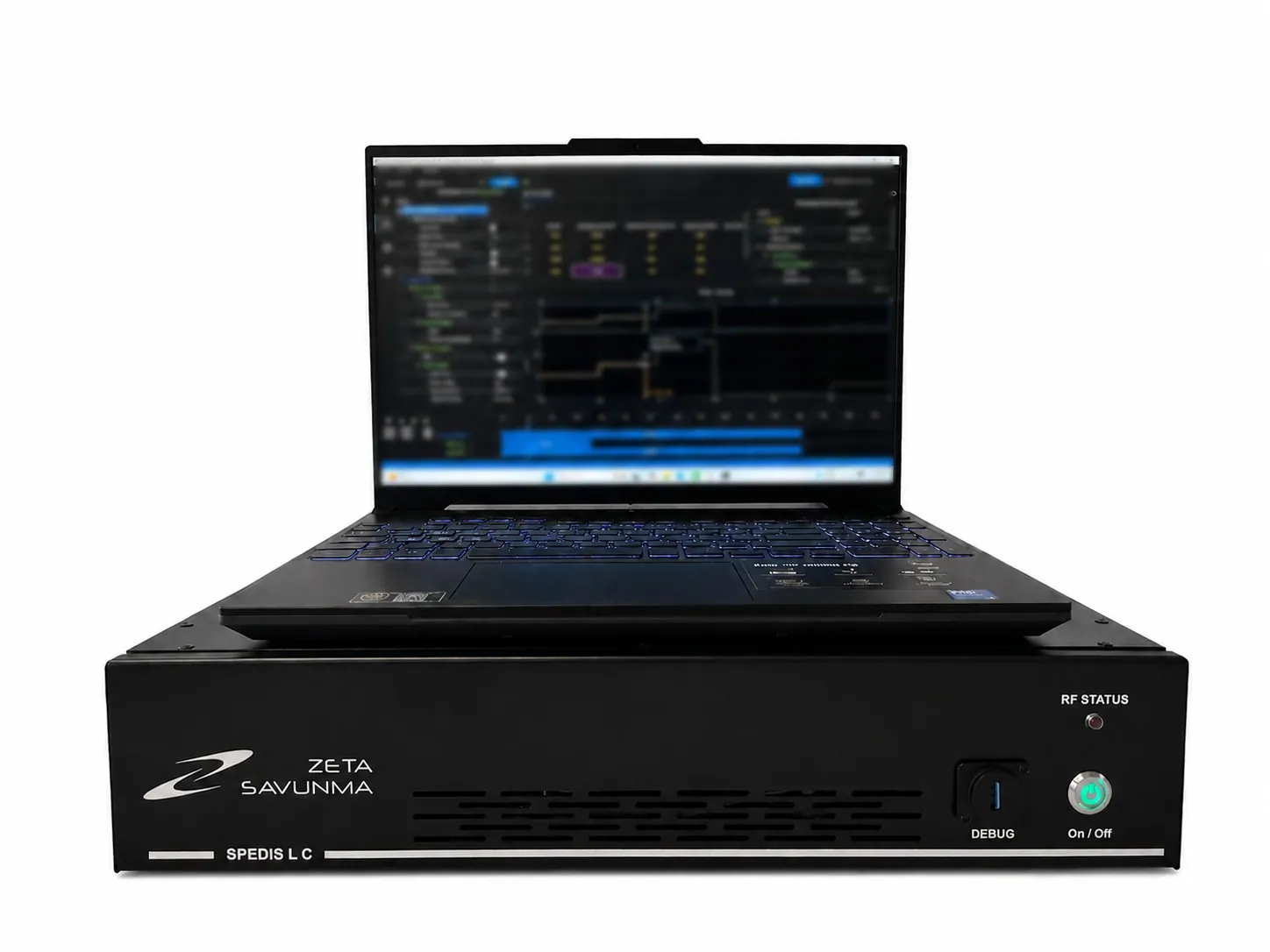
SPEDIS-RATS echo simulator unit with the operator software on a laptop

Overview

A ground return for every altitude in the flight profile

SPEDIS-RATS takes the altimeter's transmission through antenna coupling units or by direct injection and returns it with the delay and attenuation of the altitude the scenario sets. The full configuration follows dynamic flight profiles with ground return and multipath models; the C-band configuration returns one echo at a fixed range. Both use the same 2U unit and the same operator software, on the aircraft and in HWIL and SIL set-ups.

Key capabilities

  • Flight profiles

    Altitude follows a sequence of steps with vertical velocity, acceleration and hold times, or stays at one fixed range. Scenarios are saved, reloaded and played back on a timeline, and applied values are logged.

  • Ground return models

    Swerling 0–IV radar cross-section models with fixed or two-way path loss. Optional Doppler follows the altimeter frequency measured by IFM.

  • Multipath reflections

    Fixed path difference, double bounce or random ground points that change during the scenario, each with its own relative amplitude.

  • Altimeter signal measurement

    Shows the spectrum around the set centre frequency, finds the altimeter signal before a run and measures its frequency, amplitude, PRI and pulse rate.

  • Testing on the aircraft

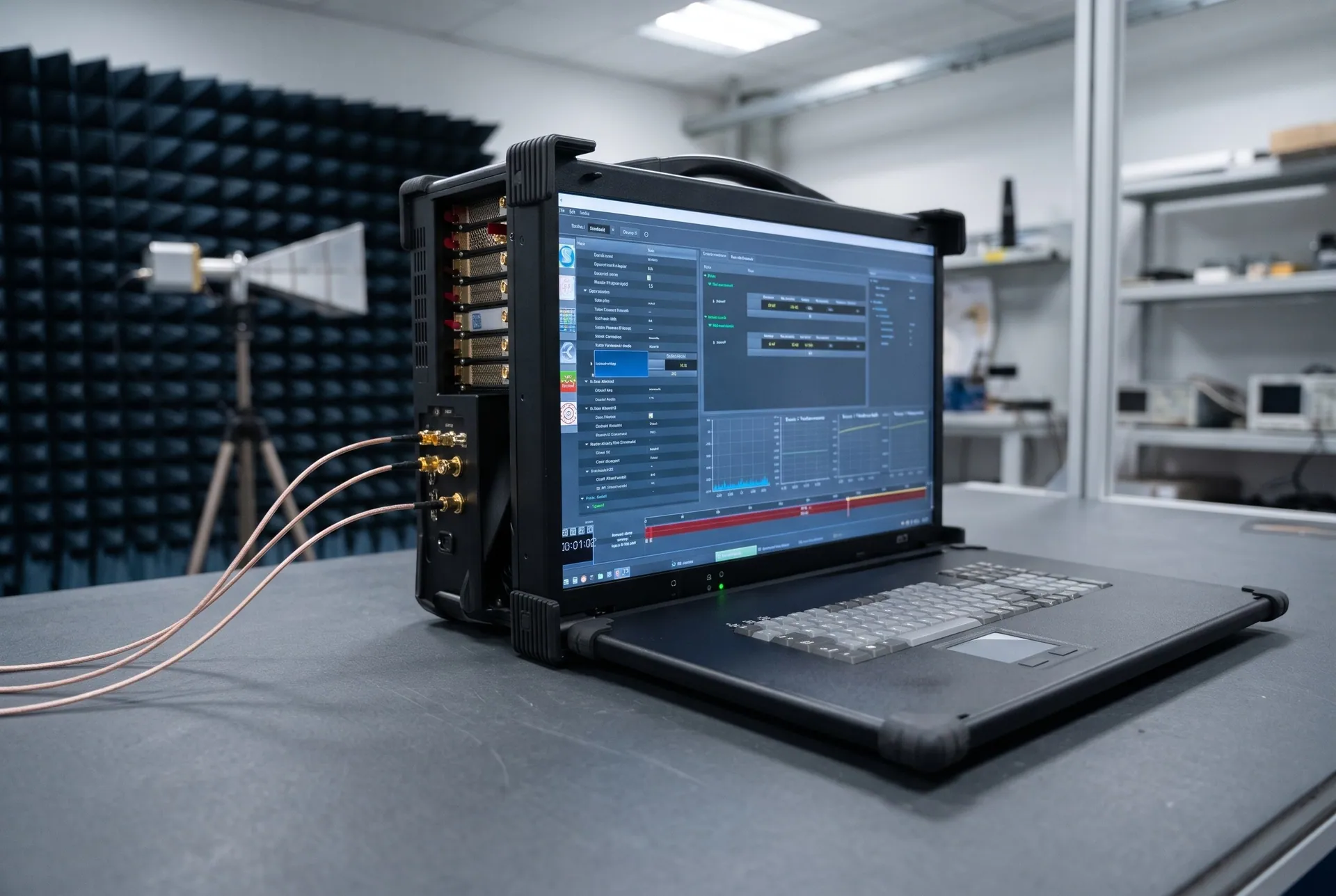
    Receive and transmit antenna coupling units stand under the altimeter antennas on tripods, adapted to the fuselage and antenna size. The operator tablet connects over Ethernet, so one person runs the test from the cockpit.

  • Built-in test and self-calibration

    Checks its own hardware and calibrates internal delay automatically, with no external test equipment. Test logs and fault reports support fault finding.

Applications

Defence and security

  • Radar altimeter testing on rotary-wing and fixed-wing aircraft
  • Radar altimeter verification in HWIL and SIL test set-ups
  • Fault finding and acceptance testing of radar altimeters

Specifications

Configurations
Full: flight profiles, ground return and multipath; C band: one echo at a fixed range
Frequency range
3–18 GHz and 24–30 GHz, adjustable centre frequency; C-band configuration: 4.0–4.5 GHz
Instantaneous bandwidth
500 MHz
Supported signals
FMCW (sawtooth up, sawtooth down, triangular up/down, triangular down/up; sweep up to 500 MHz, sweep time ≥ 1 µs) and pulsed
Input signal level
−30 to 0 dBm; maximum safe input +10 dBm
Output level
Up to −30 dBm; attenuation 60 dB in 1 dB steps
Output dynamic range
80 dB block (40 dB instantaneous)
Simulated altitude
1–1500 m along a flight profile; C-band configuration: 5–1500 m, fixed
Range resolution
1 m
Vertical velocity
0–30,000 m/s, 1 m/s resolution
Hold time
0–1000 s
Radar cross section
−60 to +60 dBsm, 1 dB resolution
Multipath
Relative amplitude −40 to −10 dB, path difference 1–5000 m
Doppler
Follows the measured altimeter frequency (IFM, optional)
Connections
SMA 50 Ω for direct injection, or receive and transmit antenna coupling units
Control
Operator software on Windows or Linux; 1 Gigabit Ethernet
Form factor
19-inch rack, 2U
Power
220 V AC, 50 Hz
Weight
< 20 kg
Operating temperature
0–50 °C

Detailed specifications are available on request.