
Wideband SDR receiver for signal intelligence
OCR-1911
A 1U wideband software-defined receiver covering 75 MHz to 6 GHz with 200 MHz instantaneous bandwidth and 10 GbE data streaming.
- Defence and security
Automated wideband COMINT & spectrum analysis platform
Rule-based signal collection, GPGPU channelization and protocol decoding.
Replaces manual frequency masks and fixed channel assignments with noise-riding detection, multi-channel GPGPU digital down-conversion and feature-based protocol classification across networked monitoring sites.
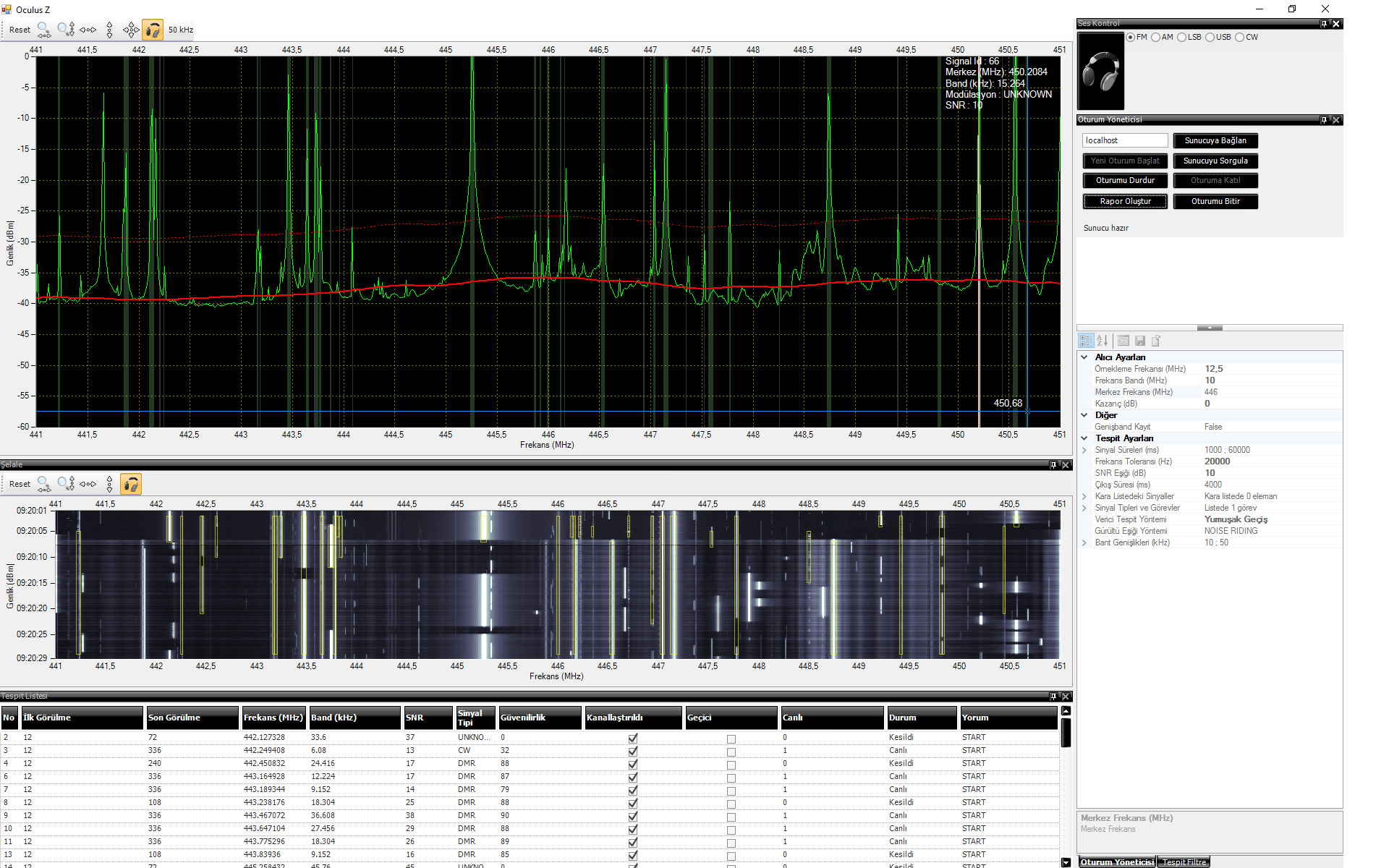
Traditional spectrum monitoring forces operators to draw static frequency masks and manually assign limited receiver channels. Oculus Z runs collection as an automated session: operators define target signal rules by frequency band, SNR, bandwidth, duration and protocol (such as DMR, TETRA or APCO P25). The server continuously estimates the regional noise floor, detects every transmission rising above a noise-riding threshold, measures centre frequency and bandwidth, and dynamically allocates a 32-bit GPGPU digital down-converter (DDC) channel to demodulate, decode and log the emission.
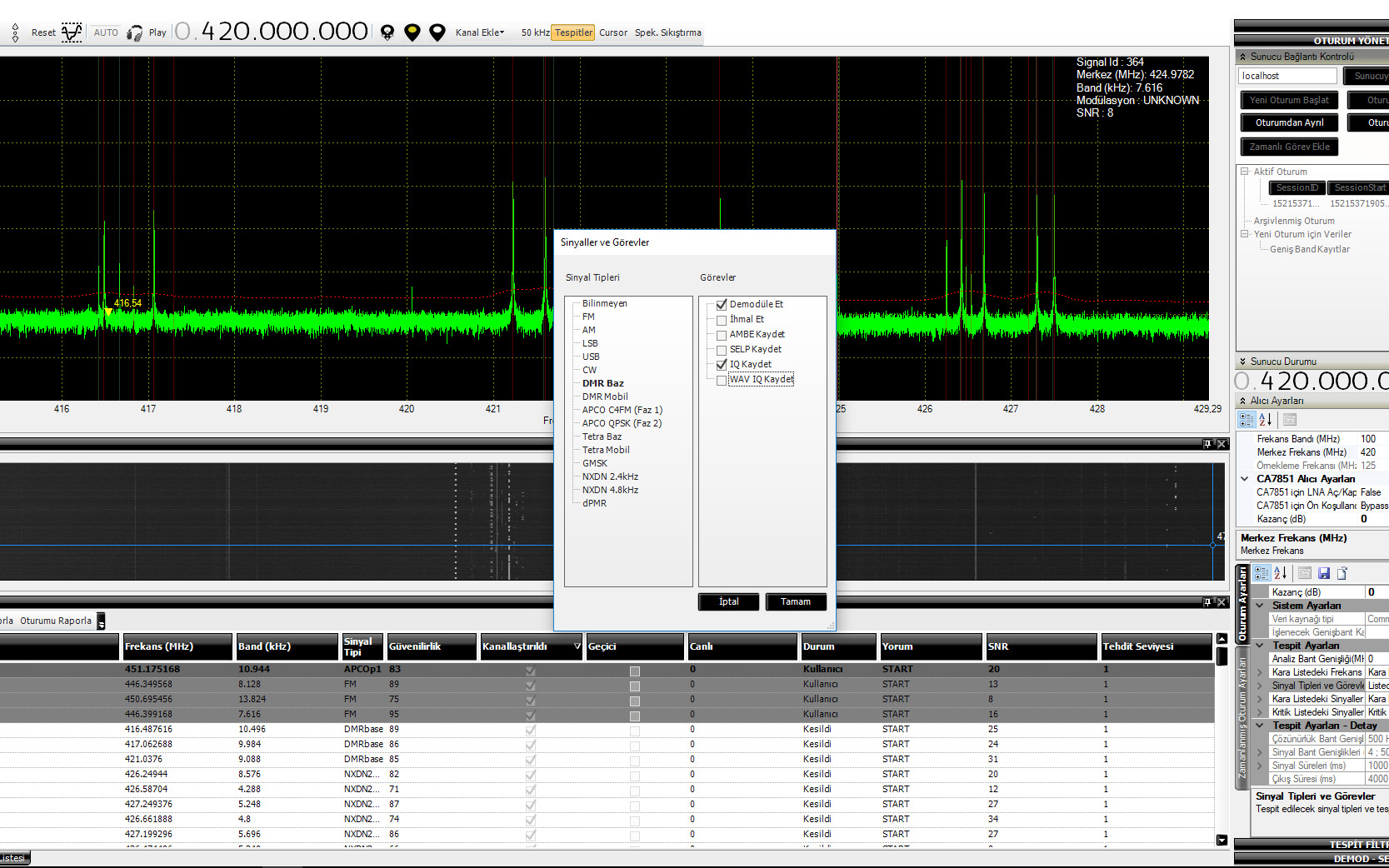
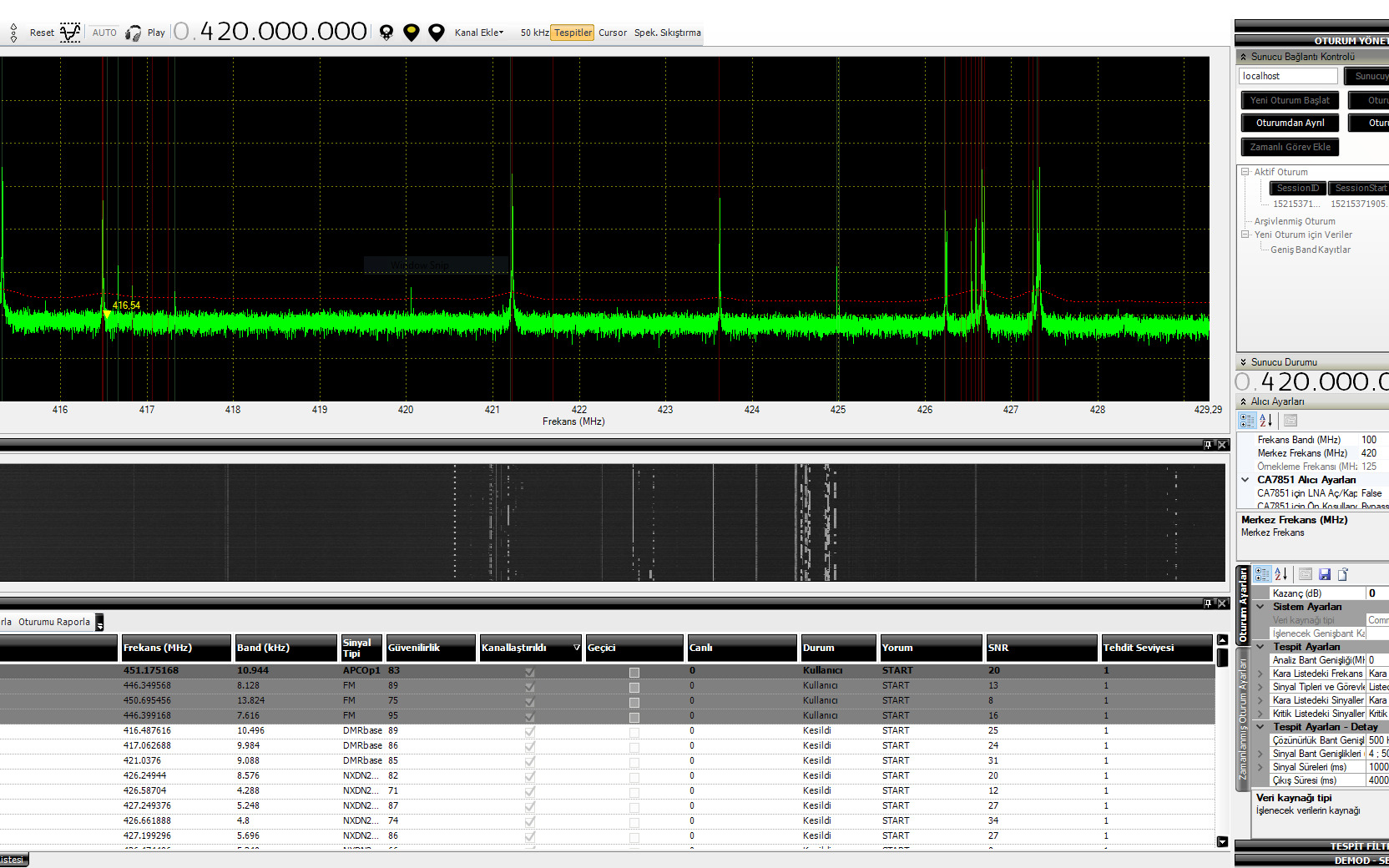
Frequency-region-specific algorithms track the live noise floor and apply a noise-riding SNR threshold to isolate transient and continuous transmissions, automatically estimating centre frequency and occupied bandwidth without operator tuning.
A GPGPU multi-channel digital down-converter filters each detected emission to its measured bandwidth with 32-bit floating-point tuning and sample resolution. Scales from 128 standard channels to 2,048 real-time channels (4 × 512 channels across four 125 Msps VITA-49 streams on a single NVIDIA RTX A5000).
Classifies signals by physical and protocol features rather than modulation alone: APCO P25 (Phase I/II), DMR, TETRA, NXDN, dPMR, D-STAR, Yaesu Fusion, DTMF and analogue voice, plus PSK, DPSK, FSK, CPFSK, OQPSK, GMSK, QAM and AFSK. Supports custom DMR vocoders and key recovery/database synchronisation across stations for TETRA TEA1, DMR Basic/Enhanced Privacy, DMR RC, APCO ADP and NXDN scramblers.
Operators define priority and ignore lists by frequency band, bandwidth, duration and signal type so critical emitters receive DDC and decoder resources first. When no rule is specified, resources are allocated dynamically by highest SNR.
Stores timestamped detections, decoded audio/data, vocoder metadata and narrowband files in PostgreSQL or MS SQL, alongside optional full-band IF recording for retrospective reanalysis with new parameters. Supports compressed narrowband TDOA geolocation, VITA-49 baseband socket output to third-party tools, and REST/Java APIs.
In the 118–137 MHz air-ground communications band, transmissions are detected automatically, their parameters measured and classified, and recorded as narrowband files.
Ingests 16-bit complex IQ streams over 10GbE VITA-49 from ZETA OCR-1911 receivers (9 kHz–32 MHz HF and 20 MHz–6 GHz V/UHF with 100 MHz IFBW and sub-octave preselectors), CommsAudit 7851/7852/7814, Signal Hound BB60C, DRS Vesper, Ettus USRP hardware or stored wideband recordings.
Deployed near the receiver over 10GbE fibre, the server executes noise-floor tracking, GPGPU channelization, classification, decoding and wideband/narrowband database recording in the field.
Reduces WAN traffic by keeping raw wideband IQ in the field and compressing output streams: a 125 Msps (100 MHz IFBW) receiver requires ~300 kbps per client for 16 fps spectrum/waterfall rendering, live detections and command-and-control combined.
Multiple local or remote operators attach to the same collection session simultaneously, inspect emitter histories, trigger TDOA geolocation or stream baseband channels to external decoders over VITA-49 sockets.
Detailed specifications and export information are available on request.
Wideband SDR receiver for signal intelligence
A 1U wideband software-defined receiver covering 75 MHz to 6 GHz with 200 MHz instantaneous bandwidth and 10 GbE data streaming.
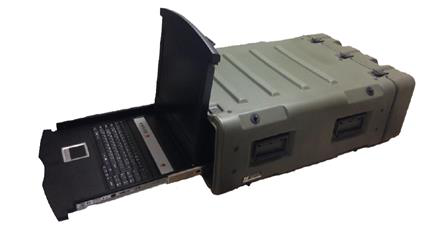
Wideband IF recording and monitoring system
A portable wideband recording system that records IF signals at 500 MHz bandwidth and is controlled and monitored over the network.